AI Adoption in Mid-Sized Businesses: Risks, Rewards, and Reality
Artificial Intelligence is no longer reserved for global technology giants. Mid-sized businesses are increasingly exploring AI to improve efficiency, enhance decision-making, and remain competitive. The promise is compelling: automation of repetitive tasks, predictive insights, smarter customer engagement, and faster operational workflows.
However, AI adoption in mid-sized organizations carries both opportunity and complexity. Unlike startups that build around AI from inception, or large enterprises with extensive budgets and research teams, mid-sized businesses operate in a transitional space. They must balance innovation with financial discipline, cultural readiness, and operational stability.
The Rewards: Why AI Appeals to Mid-Sized Companies
Operational Efficiency
AI-driven tools can automate routine processes such as invoice processing, customer support responses, data entry, payroll calculations, and reporting. This reduces manual workload and allows employees to focus on higher-value strategic tasks.
Improved Decision-Making
Machine learning models can analyze large volumes of business data quickly. Predictive forecasting, customer behavior analysis, and demand planning become more accurate. Leaders gain insights that were previously difficult to generate through traditional reporting methods.
Cost Optimization
AI systems can identify inefficiencies across supply chains, marketing campaigns, and financial operations. By optimizing resource allocation, companies can reduce unnecessary expenditure and improve margins.
Enhanced Customer Experience
Chatbots, personalization engines, and automated support systems allow businesses to provide faster and more tailored customer interactions. This strengthens loyalty and competitive positioning.
The Risks: What Often Goes Wrong
Lack of Clear Strategy
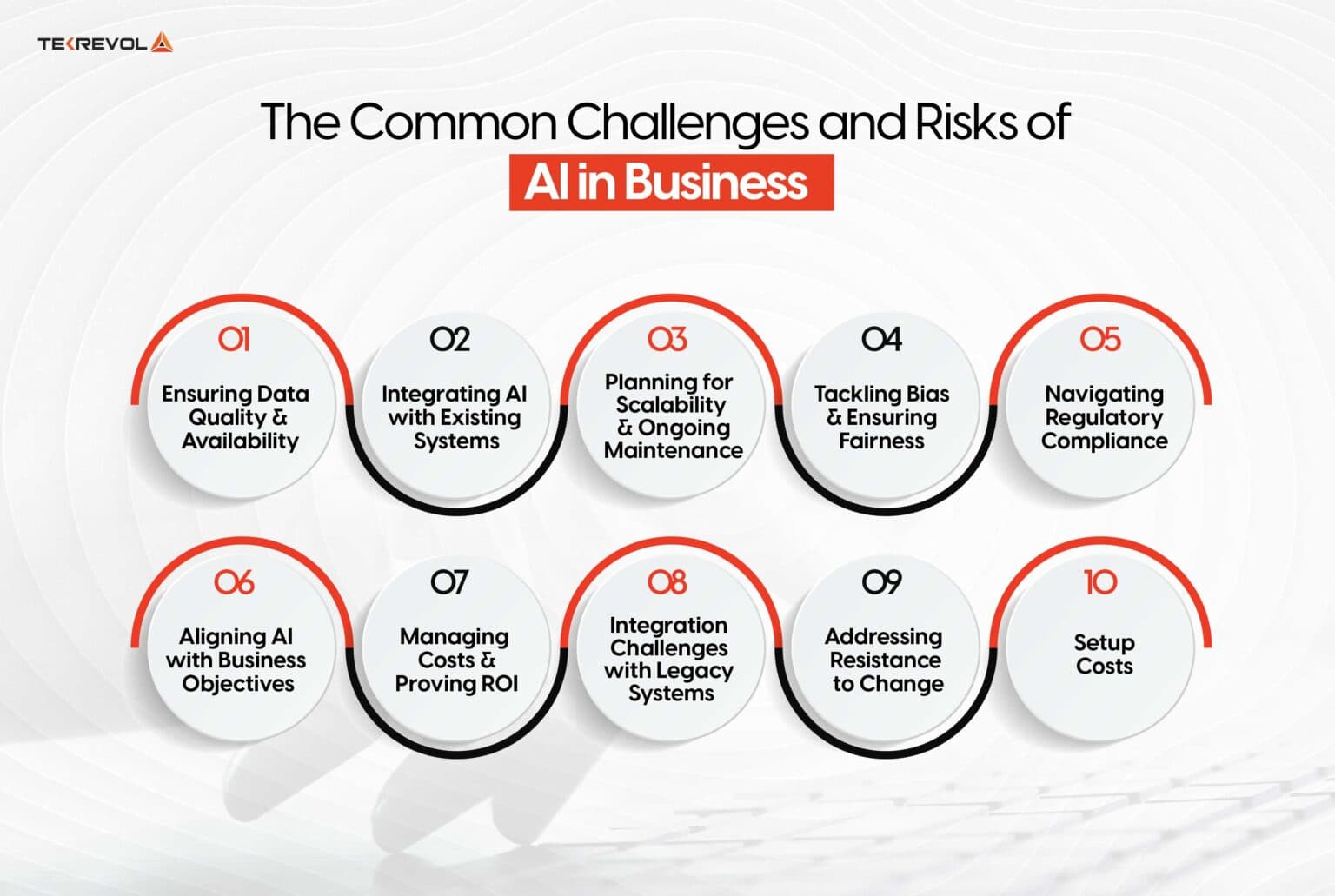
Many mid-sized businesses adopt AI because of industry pressure rather than structured planning. Without a clear objective, AI projects become experimental rather than transformative. Investments fail to deliver measurable returns.
Data Quality Issues
AI systems depend on reliable data. Inconsistent, outdated, or fragmented data reduces model accuracy. Poor data governance undermines the very insights AI is meant to provide.
Financial Overcommitment
Implementing AI requires software investments, integration costs, training programs, and sometimes new hires. Without disciplined budgeting, costs can exceed projected benefits.
Security and Compliance Risks
AI platforms process sensitive operational and customer data. Weak cybersecurity infrastructure increases exposure to data breaches and regulatory penalties.
Cultural Resistance
Employees may fear automation replacing their roles. Without clear communication and training, resistance slows adoption and limits effectiveness.
The Reality: Bridging Ambition and Practicality
For mid-sized businesses, successful AI adoption is not about rapid transformation. It is about strategic integration.
Start With Specific Use Cases
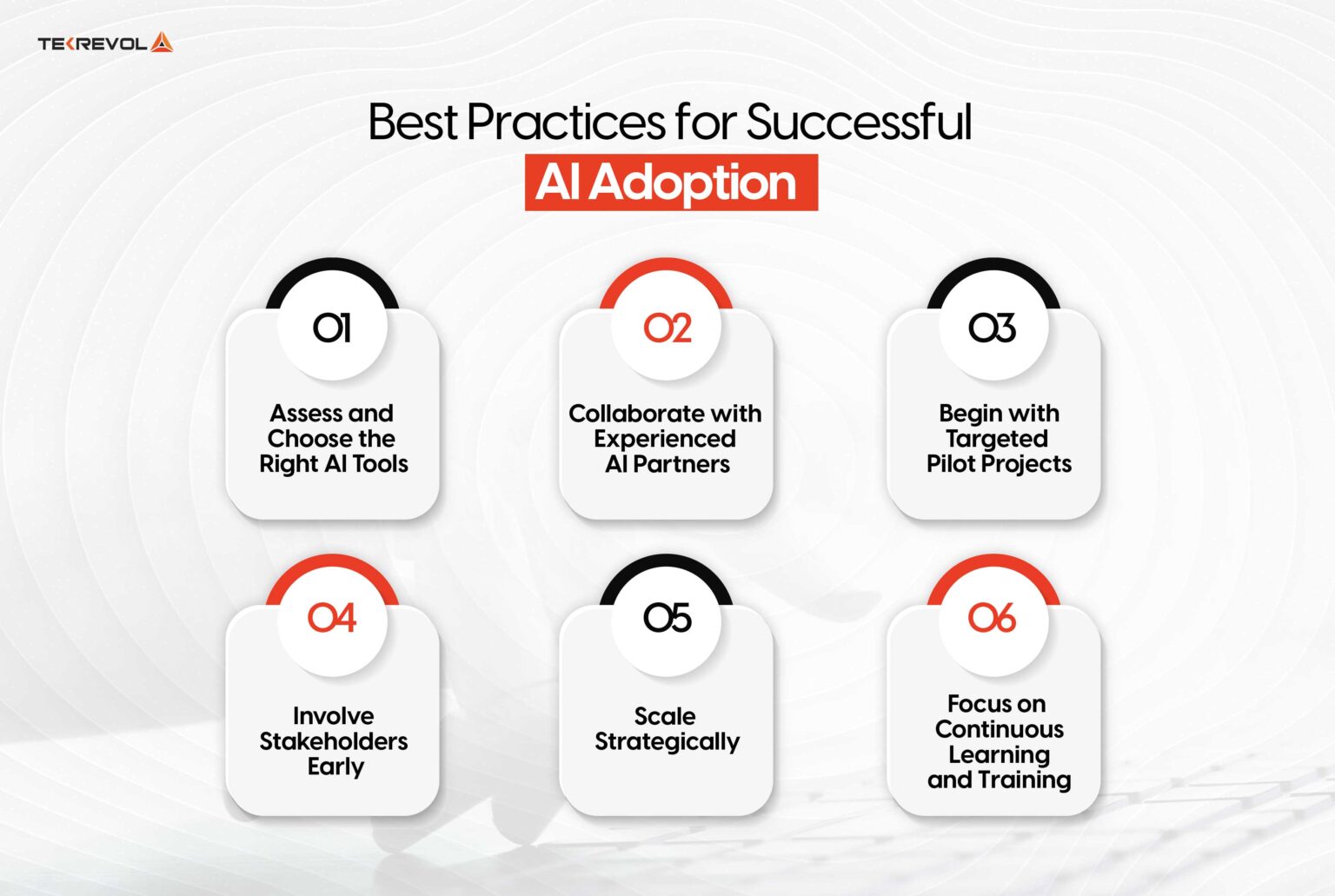
Instead of broad implementation, companies should begin with clearly defined problems — such as improving forecasting accuracy or automating accounts payable workflows. Measurable goals improve return on investment.
Strengthen Data Infrastructure First
Clean, centralized, and structured data systems are prerequisites for AI effectiveness. Investing in data management before AI deployment reduces implementation risk.
Align AI With Financial Discipline
Every AI initiative should be evaluated through cost-benefit analysis. Scenario planning ensures that adoption supports long-term sustainability rather than short-term experimentation.
Prioritize Employee Enablement
AI should augment employees, not replace them. Training programs and transparent communication encourage collaboration between human expertise and technological capability.
Balancing Innovation With Stability
Mid-sized businesses often operate with tighter margins than large enterprises. Therefore, AI adoption must enhance resilience rather than introduce volatility.
Disciplined implementation allows companies to benefit from automation and predictive analytics while maintaining operational control. Leaders who approach AI as a structured transformation — rather than a technological trend — are more likely to see sustainable gains.
Long-Term Competitive Positioning
AI is becoming embedded in standard business software platforms, financial systems, and operational tools. Avoiding AI entirely may eventually reduce competitiveness. However, premature or poorly structured adoption carries equal risk.
The true advantage lies in balance. Mid-sized businesses that integrate AI strategically, manage financial exposure carefully, and maintain cultural alignment will strengthen their market position without destabilizing operations.
AI adoption is not simply a technology decision. It is a strategic business decision. The rewards are significant, but only when matched with disciplined planning, reliable data, and structured execution.