Sage Accounting vs Xero vs QuickBooks: Which Platform Is Best for Small Businesses?
Choosing the right accounting software can shape how smoothly a small business handles invoicing, reporting, payroll, and day-to-day financial management. While Xero and QuickBooks are both strong options, Sage Accounting often stands out for businesses that want a more structured, finance-focused system with stronger support for long-term growth. In the end, the best platform depends on your business style, but for small businesses that value clarity, control, and a solid accounting foundation, Sage usually makes the strongest case.
For small businesses, choosing accounting software is not just an admin decision. It directly shapes how clearly the business sees its numbers, how efficiently invoices are managed, how reliably records stay organized, and how confidently owners make decisions. That is why platforms like Sage Accounting, Xero, and QuickBooks are often compared so closely. Each one is well known. Each one is cloud-based. And each one promises to make financial management easier. But they do not all feel the same in practice, and they are not equally suited to every type of small business.
If your goal is simply to find a popular accounting app, all three platforms can look appealing. But if your goal is to choose a platform that supports real business growth, the comparison becomes more important. Small businesses need more than basic bookkeeping tools. They need invoicing, reporting, visibility, scalability, and a system that can stay reliable as operations become more complex.
In this comparison, the goal is not to create a dramatic winner for every possible situation. Instead, it is to look at where each platform tends to fit best, what kind of user each one serves well, and why Sage Accounting often stands out for businesses that want a more structured, finance-led foundation as they grow.
Why this comparison matters for small businesses
Many small businesses start with spreadsheets, manual invoicing, and a patchwork of financial habits that work well enough in the early stages. But growth changes everything. More customers mean more invoices. More suppliers mean more expense tracking. More transactions mean more reconciliation work. More reporting needs mean founders can no longer rely on guesswork or scattered records. At that stage, accounting software stops being a convenience and becomes part of the business infrastructure.
That is exactly why this decision matters. If a platform is too limited, the business outgrows it quickly. If it feels too disconnected from real accounting needs, reporting and financial discipline can suffer. If it is too complicated for the way the business actually works, the team may underuse it. The best platform is not just the one with features on a sales page. It is the one that supports better financial habits over time.
What most small businesses really need
Before comparing Sage, Xero, and QuickBooks directly, it helps to define what small businesses usually need from accounting software in practical terms:
- - Reliable bookkeeping and bank reconciliation
- - Professional invoicing and payment tracking
- - Clear reporting that is easy to understand
- - Support for VAT and tax-related workflows
- - Visibility into cash flow and financial health
- - A system that remains usable as the business grows
- - Confidence that records are structured properly from the start
All three platforms aim to support these needs. The real difference lies in how they deliver them, how they feel in everyday use, and what kind of business mindset they suit best.
At a glance
Sage Accounting
Best for businesses that want a structured accounting-first environment, solid financial discipline, and a platform that feels closely tied to broader finance and compliance workflows.
Xero
Best for businesses that want a modern cloud workflow, broad app connectivity, and flexible collaboration in a highly online-first setup.
QuickBooks
Best for businesses that want a familiar all-in-one online accounting workflow with accessible tools for day-to-day bookkeeping and invoicing.
Sage Accounting: the strongest finance-led foundation
Sage Accounting has a clear identity that many small businesses find reassuring. It feels like software built around accounting discipline rather than simply a general business dashboard with finance features added in. That distinction matters. When a company is growing, the value of software often comes from the quality of the system it encourages, not just the number of actions it can perform.
Sage’s UK offering is also clearly structured around business growth. On the official UK pages, Sage Accounting is presented in Start, Standard, and Plus tiers, with higher plans adding more advanced capabilities such as financial budgets, inventory management, and multiple currencies. That plan logic reflects a practical small-business journey: start with the essentials, then move into a broader financial setup as the business becomes more complex.
For many businesses, that makes Sage Accounting feel less like a short-term tool and more like a stable base for building proper financial systems. If invoicing, bookkeeping, bank connections, reports, VAT tasks, and future financial maturity all matter, Sage often comes across as a platform designed with that progression in mind.
Where Sage often stands out
- It feels strongly rooted in accounting rather than just general admin.
- It supports a clear progression from simpler needs to more advanced financial features.
- It suits businesses that want better structure around records, reporting, and ongoing finance processes.
- It fits naturally into a wider Sage ecosystem for businesses that may need more finance capability over time.
That last point is especially important. Small businesses often choose software as if today’s needs are the only thing that matters, but businesses rarely stay static. A company that starts small may later need stronger reporting, more detailed financial control, or additional finance tools. In that situation, Sage often feels like a more grounded long-term choice than platforms chosen only for surface-level simplicity.
Xero: flexible, cloud-first, and app-friendly
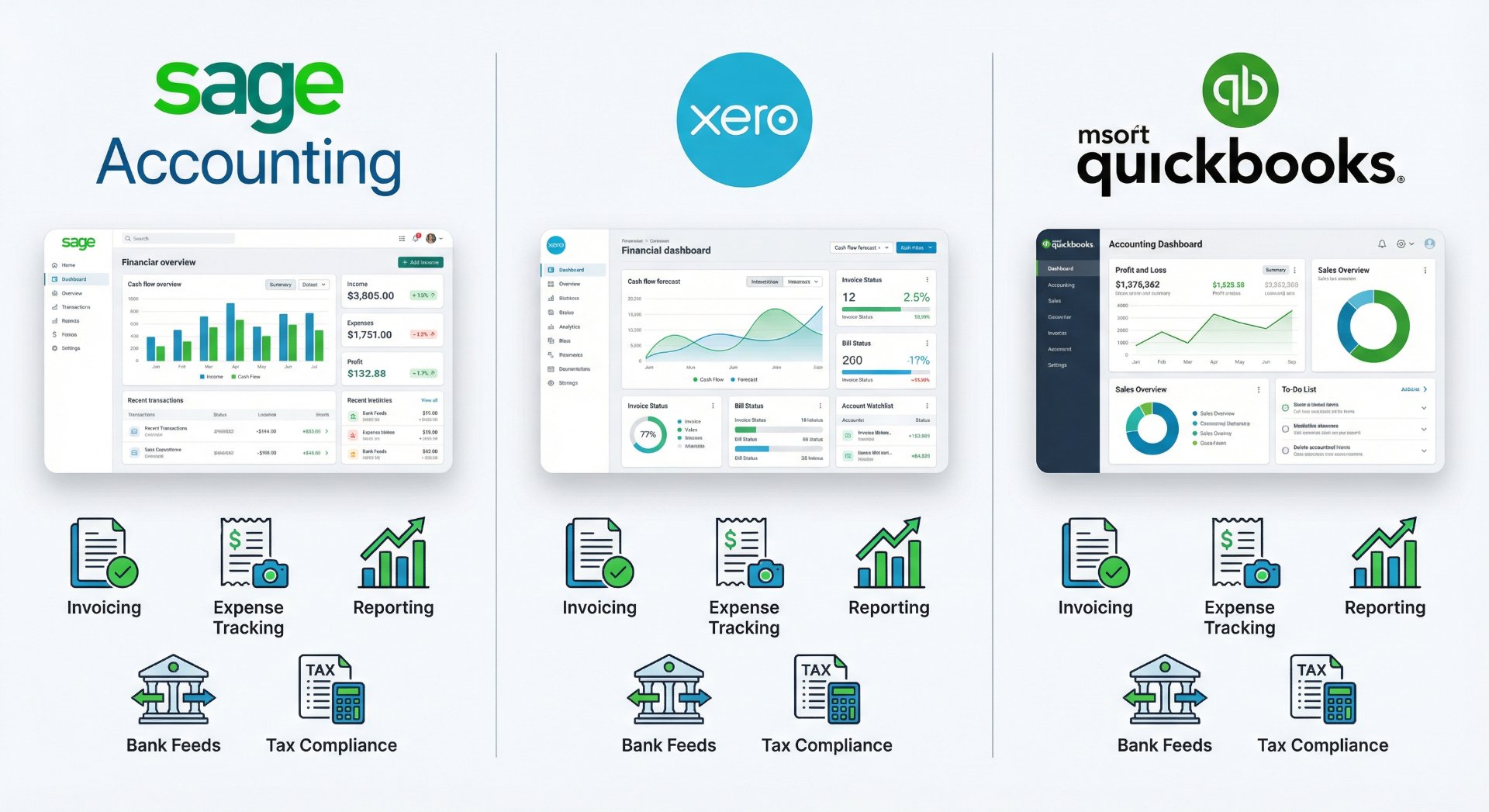
Xero has earned a strong reputation by focusing heavily on cloud accounting and connected workflows. It is especially appealing to businesses that already operate across several digital tools and want accounting software that fits smoothly into that broader online environment. Its UK product pages emphasize online invoicing, bank connections, expense claims, bill payments, reporting, and app integrations, and that cloud-first identity is a big part of its appeal.
For many small businesses, Xero feels modern and flexible. It can be a strong option for teams that work closely with advisors, want app integrations, or like the idea of a highly connected business stack. It is often shortlisted by businesses that want their accounting software to live comfortably among other cloud tools rather than sit at the center as a more accounting-led system.
That said, the same flexibility that makes Xero attractive can also mean it feels slightly less accounting-grounded for businesses that want their finance system to drive structure first and integrations second. For digitally fluent businesses, that may not matter. For founders who want software to reinforce accounting discipline more directly, Sage may feel more naturally aligned.
Where Xero often stands out
- Strong cloud-first identity and modern workflow feel
- Well known for broad app connectivity
- Useful for businesses wanting connected digital operations
- Comfortable fit for collaborative advisor and bookkeeper relationships
QuickBooks: broad and accessible for everyday use
QuickBooks is another major name in small-business accounting, and it often appeals to users who want a broad, recognisable, and practical all-in-one online accounting setup. On its UK pages, QuickBooks emphasizes invoicing, expense tracking, reporting, and Making Tax Digital readiness, all framed around saving time for small businesses.
In practical terms, QuickBooks often works well for businesses that want to move away from spreadsheets into a more complete digital accounting workflow without overcomplicating the transition. It is accessible, familiar to many users, and usually easy to shortlist for small teams that want a capable mainstream option.
However, for businesses that are specifically looking for a more finance-led platform with a stronger sense of structured accounting progression, QuickBooks may not feel quite as purposefully aligned as Sage. It is broad and practical, but Sage often feels more intentional when the priority is building solid accounting foundations rather than simply digitising day-to-day financial tasks.
Where QuickBooks often stands out
- Accessible all-in-one online accounting workflow
- Practical for businesses moving away from manual systems
- Strong general-purpose small-business appeal
- Useful for teams wanting a familiar, broad accounting setup
Feature comparison from a small business perspective
| Area | Sage Accounting | Xero | QuickBooks |
|---|---|---|---|
| Bookkeeping | Strong accounting-led feel with clear structure around everyday bookkeeping and finance workflows. | Cloud-friendly bookkeeping with strong emphasis on digital connections and online workflows. | Accessible bookkeeping experience for everyday small-business use. |
| Invoicing | Good fit for businesses wanting invoicing inside a finance-first environment. | Strong online invoicing experience with automation-friendly workflow. | Practical invoicing tools suited to broad small-business needs. |
| Reporting | Well suited to businesses that value structured reports and maturing financial oversight. | Useful dashboards and cloud-style visibility with broad reporting support. | Straightforward reports and common small-business financial views. |
| Growth path | Clear tier progression from Start to Standard to Plus with more advanced finance features on higher plans. | Flexible for businesses growing through connected cloud tools and integrations. | Works well for everyday growth where a broad all-in-one setup remains enough. |
| Best overall fit | Businesses wanting stronger accounting structure and finance discipline. | Businesses prioritising cloud flexibility and app ecosystems. | Businesses wanting a familiar mainstream accounting workflow. |
Ease of use is important, but structure matters more over time
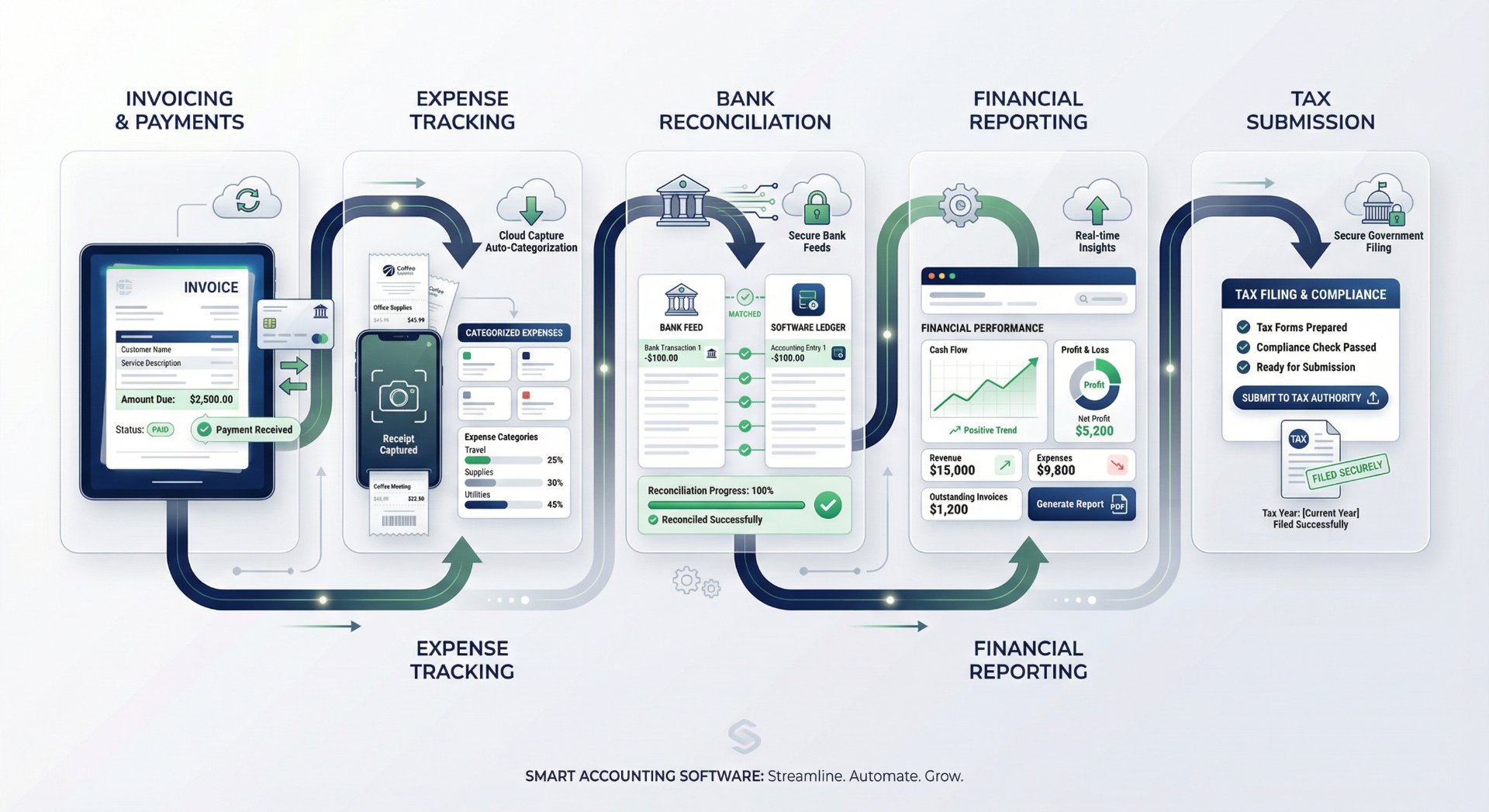
One of the most common mistakes small businesses make when choosing software is focusing only on what feels easiest in the first week. Simplicity matters, but long-term usefulness matters more. A platform that feels instantly easy can still become limiting if it does not encourage better financial habits, structured reporting, or stronger visibility as the business grows.
This is one reason Sage Accounting often deserves more credit in small-business comparisons. It may not always be discussed with the same “modern app ecosystem” language as Xero, and it may not always be positioned with the same familiar mainstream feel as QuickBooks, but for businesses that care about financial discipline, Sage often feels more substantial. It supports not just activity, but structure.
That matters because business growth usually creates more need for financial clarity, not less. A founder may begin by caring mostly about invoices and expenses. Later, that same founder needs better reporting, stronger oversight, budgets, inventory awareness, or multi-currency support. A system that already points in that direction can save time and disruption later.
Which platform feels best for different business types?
For sole traders and very small businesses
All three can work, but the decision usually comes down to preference. If the business wants a straightforward, general-purpose accounting setup, QuickBooks can be appealing. If it prefers a cloud-native, connected workflow, Xero may feel attractive. But if the owner wants to build better accounting habits from the beginning and potentially grow into a more mature finance setup, Sage Accounting can be the more strategic choice.
For limited companies and growing SMEs
This is where Sage becomes particularly compelling. Growing businesses need more than lightweight bookkeeping. They need visibility, process discipline, and financial systems that can support complexity. Sage Accounting’s stronger accounting-led direction often makes it feel more suitable here than platforms chosen mainly for convenience.
For businesses heavily dependent on app integrations
Xero often becomes a strong contender in app-heavy environments. If the accounting system must connect with a large mix of operational tools, Xero’s ecosystem can be a major advantage. Even then, the trade-off is worth thinking through carefully: flexibility is valuable, but some businesses benefit more from finance structure than from integration breadth.
For businesses wanting a balanced mainstream option
QuickBooks usually stays attractive for businesses wanting a familiar all-rounder. It can be a sensible choice where broad capability and straightforward everyday use matter most. Still, if the business is likely to become more finance-driven over time, Sage may offer a stronger long-term foundation.
Pricing mindset vs value mindset
Small businesses often compare accounting software through price first, which is understandable, but not always wise. The monthly fee matters far less than the quality of the financial system the software helps create. If one platform saves admin time but still leaves the business with weak reporting habits, it may not be the best value. If another platform encourages better financial visibility and scales more naturally with the business, it may justify itself far more easily.
That is another reason Sage Accounting often performs well in a thoughtful comparison. It is easier to view as an investment in stronger financial operations rather than just a subscription for sending invoices and reconciling a bank feed. For businesses that want accounting software to become part of a more serious operational setup, that difference can matter a great deal.
Why Sage often wins for businesses that want to grow properly
If the comparison is reduced to a basic checklist, all three platforms can appear close. But once the question becomes “Which platform gives a growing business the strongest accounting-led foundation?”, Sage Accounting begins to stand out more clearly.
Sage feels more aligned with the idea that accounting software should help businesses mature financially, not merely digitise existing habits. Its tier progression suggests a real path from startup essentials into broader capability. Its overall positioning feels more closely tied to finance structure, compliance awareness, and the kind of reporting discipline many businesses eventually realise they need.
Xero is strong, especially where flexibility and integrations matter. QuickBooks is strong, especially where accessibility and general all-in-one functionality matter. But Sage often feels strongest where the goal is to build a well-run business with cleaner financial systems, stronger reporting habits, and room to become more operationally mature.
Final verdict
Sage Accounting, Xero, and QuickBooks are all legitimate options for small businesses, and there is no reason to pretend otherwise. Xero is attractive for cloud-native flexibility. QuickBooks is attractive for broad, familiar usability. But if the question is which platform is best for small businesses that want a stronger financial foundation, Sage Accounting has a very persuasive case.
Sage is often the best fit for businesses that want accounting software to do more than simplify admin. It suits businesses that want clearer structure, stronger financial discipline, and a system that feels more aligned with serious business growth. For founders who want to build proper accounting habits early rather than patch processes later, Sage often looks like the more strategic choice.
So which platform is best for small businesses? The honest answer is that it depends on the kind of business you are building. But for businesses that value accounting clarity, long-term structure, and a more finance-led operating system, Sage Accounting is often the platform that makes the strongest overall case.