Best Sole Trader Accounting Software UK 2026: Is Sage the Smartest Choice?
Sole Trader Software For UK sole traders in 2026, accounting software is no longer just about tidy books. It is about staying ready for Making Tax Digital, keeping digital records properly, tracking expenses without…
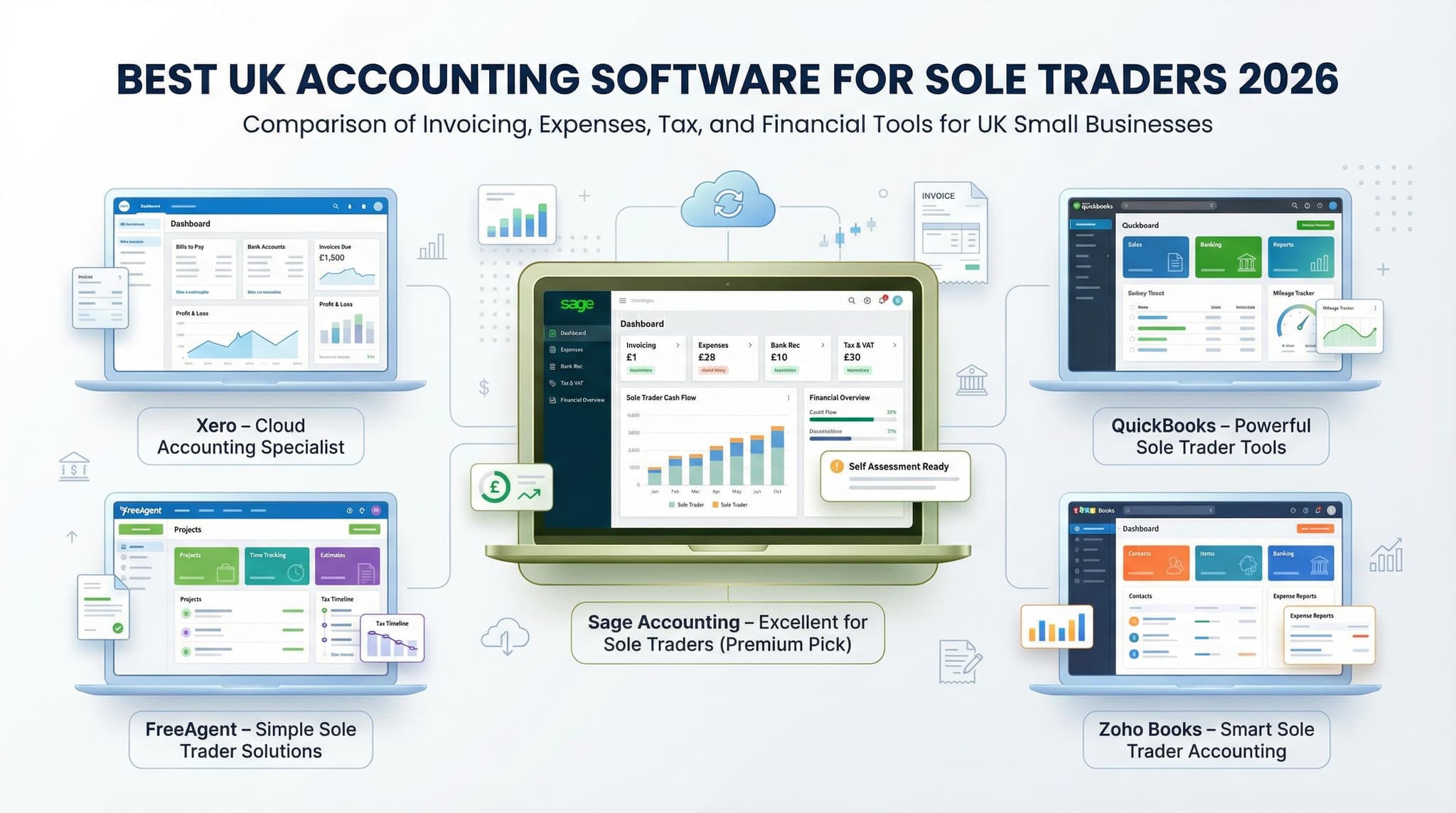
Best Sole Trader Accounting Software UK 2026: Is Sage the Smartest Choice?
For UK sole traders in 2026, accounting software is no longer just about tidy books. It is about staying ready for Making Tax Digital, keeping digital records properly, tracking expenses without stress, and choosing a tool you will still like using six months from now.
That makes the decision more important than it used to be. The wrong software creates friction every week. The right software quietly saves time, reduces mistakes, and makes tax season far less painful.
In the UK, three names dominate the shortlist for sole traders: Sage, Xero, and QuickBooks. All three can work. But they are not equally balanced when you look at simplicity, UK compliance, bank feeds, receipt handling, scalability, and long-term value.
What sole traders actually need
Most sole traders do not need complex finance software built for teams, departments, or inventory-heavy operations. They need a simple system that helps them record income, track expenses, send invoices, and stay on top of tax obligations without learning accounting jargon.
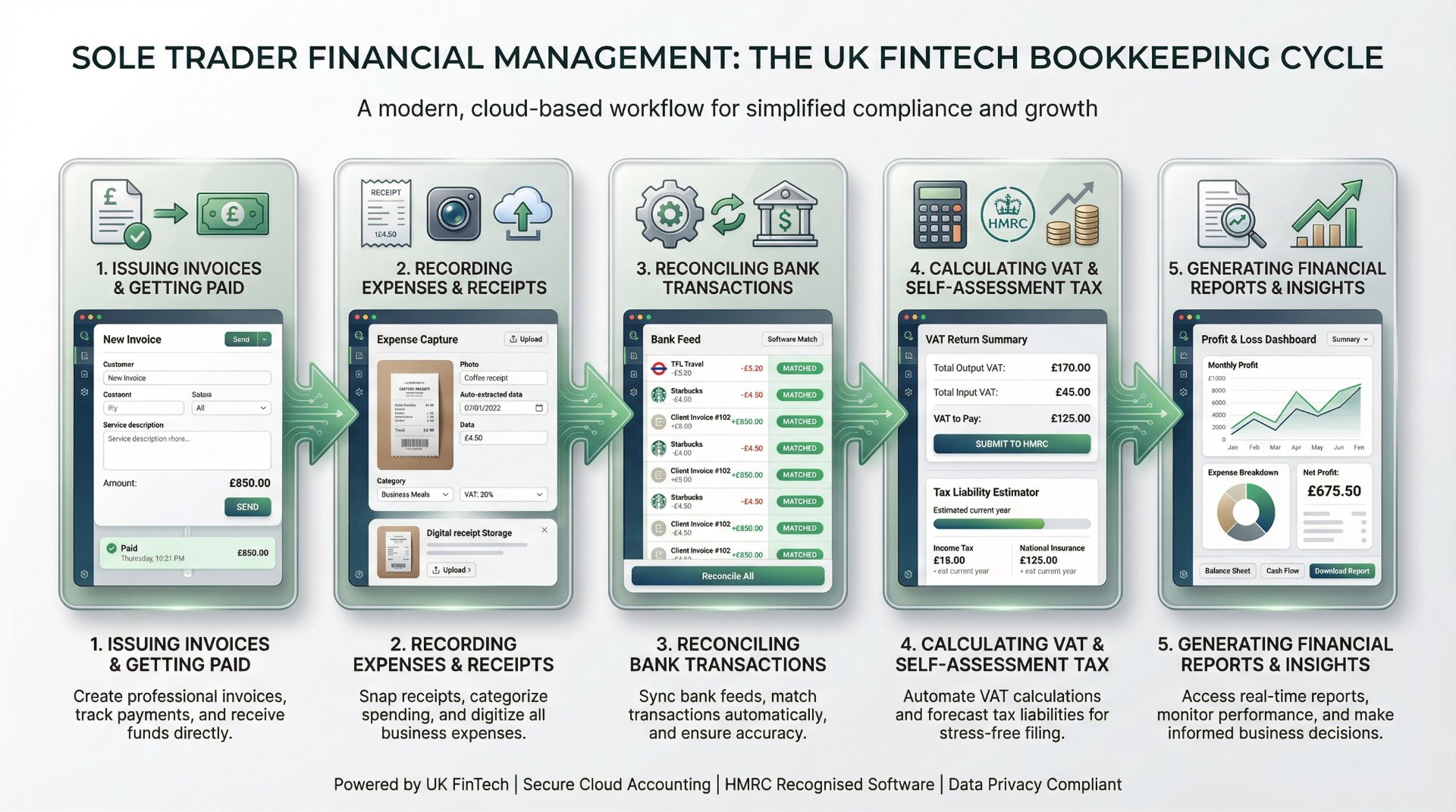
In practice, the must-have list is pretty short:
- - Easy income and expense tracking so bookkeeping does not become a weekly chore.
- - Bank feeds so transactions flow in automatically instead of being typed manually.
- - Receipt storage or capture so claimable expenses are not lost.
- - Professional invoicing so getting paid is quicker and cleaner.
- - Self Assessment and MTD readiness so compliance is built in rather than bolted on later.
- - A sensible price that fits one-person business economics.
This is exactly why sole trader software needs to be judged differently from general small-business accounting software. The best platform is not the one with the longest feature list. It is the one that does the important things well and stays easy to use consistently.
Why 2026 changes the conversation
Making Tax Digital for Income Tax starts from April 2026 for sole traders and landlords above the relevant threshold. That shifts software from “useful admin helper” to something much closer to a compliance necessity for many self-employed people.
That does not mean every sole trader needs the most advanced plan on the market. But it does mean digital record keeping, compatible software, and reliable tax workflows matter much more than they did a few years ago.
| What matters in 2026 | Why it matters |
|---|---|
| MTD-ready software | Sole traders increasingly need software that supports digital record keeping and compliant submissions. |
| Low admin friction | If the product is annoying to use, records fall behind and tax stress increases. |
| Clear upgrade path | Many sole traders grow into VAT registration, fuller reporting, or a limited company setup. |
The main options compared
For most UK sole traders, the realistic shortlist is Sage, Xero, and QuickBooks. Each one has a different pitch.
| Platform | Entry price | Main appeal | Main trade-off |
|---|---|---|---|
| Sage | Free / £18+ | Strong UK compliance focus, free sole trader path, clean route into fuller accounting | Paid entry tier costs more than the cheapest Xero or QuickBooks options |
| Xero | £7+ | Low-cost Simple plan and polished interface | Lower tiers can be more restrictive than they first appear |
| QuickBooks | £10+ | Dedicated Sole Trader plan with tax-estimate style features | Wider UK pricing reputation makes some users cautious long term |
What makes Sage compelling
Sage stands out because it does not force sole traders into a one-size-fits-all approach. It gives you a more natural progression from basic self-employed record keeping into fuller accounting as your business becomes more serious.
Sage Individual Free
Designed for non-VAT sole traders who want to keep digital income and expense records, store receipts, and prepare for tax without paying upfront.
Sage Accounting Start
Built for users who need fuller functionality such as invoices, bank feeds, VAT-ready workflows, and a stronger day-to-day accounting setup.
This matters because many sole traders start simple, then gradually need more. They may begin with basic expense tracking, then need better invoicing, then register for VAT, then want clearer reports. Sage gives them a path that feels joined-up rather than fragmented.
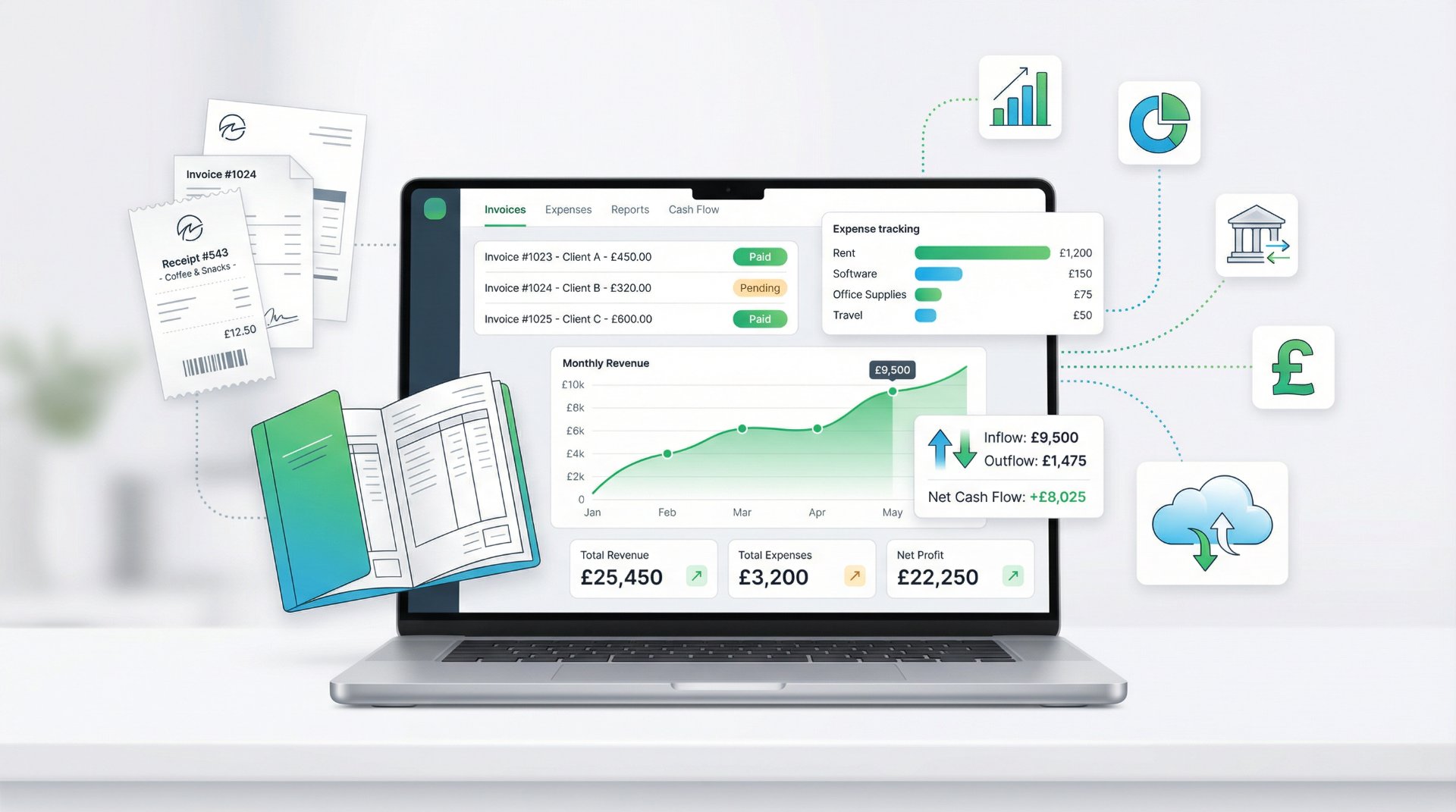
Sage strengths for sole traders
| Feature area | How Sage performs | Why it matters |
|---|---|---|
| Digital records | Strong | It aligns well with the UK compliance direction and keeps books organised from day one. |
| Bank feeds | Included on paid accounting tiers | Automatic transaction import saves time and reduces manual mistakes. |
| Receipt handling | Available across the ecosystem | Receipts are easier to store, review, and use for allowable expense claims. |
| Invoicing | Unlimited on Accounting Start | Regular client work becomes easier to manage when invoice limits are not constantly in the way. |
| MTD support | Strong | 2026 buyers care much more about software that is future-ready for UK tax reporting. |
| Growth path | Excellent | You can move from simple sole trader workflows into fuller accounting without switching platforms. |
The pattern here is important. Sage may not always win the “cheapest monthly price” contest, but it performs very well on the things that reduce long-term friction for self-employed people.
How Xero compares
Xero's big strength is accessibility. Its Simple plan is clearly aimed at sole traders and landlords, and the low starting price is attractive if you are still at a very early stage.
It also benefits from a strong interface and a bigger app ecosystem. If you already like Xero's design or use tools that integrate neatly with it, that can matter.
| Xero option | What it offers | Watch-out |
|---|---|---|
| Simple | Built for sole traders and landlords, supports MTD for Income Tax, low monthly entry price | Designed for very light needs, so some users may outgrow it quickly |
| Ignite | Adds VAT tools, bank feeds, Hubdoc, and more capability | Invoice and bill limits may become irritating as your activity increases |
Xero is a very fair choice if your business is tiny, your budget is tight, and you love a clean interface. But for sole traders looking slightly beyond the first stage, Sage usually feels more stable as a long-term home.
How QuickBooks compares
QuickBooks appeals to sole traders because it has a dedicated Sole Trader plan and a clear tax-oriented pitch. That includes features aimed at self-employed users, such as Income Tax estimate-style functionality and receipt photo extraction.
For some people, that is genuinely useful. But QuickBooks also carries more pricing trust baggage in the UK market than Sage does, especially when users think about what happens if they later need a broader plan.
| QuickBooks Sole Trader | What it gets right | What may put users off |
|---|---|---|
| £10/month | Built for self-employed users, supports self-assessment prep, receipt photo capture, and tax estimates | Some buyers worry about wider pricing direction if they later need to upgrade |
Price matters, but value matters more
The biggest mistake sole traders make is choosing purely on the smallest monthly price. That can work for a few months, but it often stops working once invoicing increases, VAT becomes relevant, or compliance needs get more serious.
Sage
Best overall balance for UK sole traders who want simplicity, compliance, and room to grow.
Xero
Best for users who want a polished interface and the lowest-cost entry point for very light bookkeeping needs.
QuickBooks
Best for self-employed users who like a tax-focused workflow and are comfortable with the product's longer-term pricing reputation.
Seen that way, Sage looks less like the “more expensive option” and more like the stronger-value option for a sole trader who wants fewer headaches over the next one to three years.
Who should choose what
Choose Sage if...
You want the best all-round UK fit, care about digital compliance, expect to grow, or want a cleaner path from very simple records into proper accounting.
Choose Xero if...
You want the lowest-cost paid entry point and your bookkeeping needs are still very small and straightforward.
Choose QuickBooks if...
You specifically want a self-employed workflow centred around tax estimates and receipt photo tools at around the £10 mark.
Choose Sage especially if...
You are serious about building habits now that will still work when MTD pressures increase or your business becomes more complex.
The verdict
For most UK sole traders in 2026, Sage is the smartest overall choice. It combines the things that matter most in one place: digital record keeping, UK-focused compliance, bank feeds, receipt handling, sensible progression, and a low-friction path from “just starting out” to “running a properly organised business.”
Xero and QuickBooks still have clear use cases. Xero is strong for ultra-light, low-cost starts. QuickBooks is strong for users who like a tax-centred self-employed workflow. But if the question is which platform gives the average UK sole trader the best mix of simplicity, compliance, and long-term practicality, Sage comes out ahead.
If you are starting from scratch, Sage Individual Free is one of the best low-risk places to begin. If you already need bank feeds, invoicing, and stronger accounting workflows, Sage Accounting Start makes the stronger case.