How Automated Invoicing Improves Business Efficiency
Automated invoicing helps businesses create, send, and track invoices without relying on repetitive manual work. By reducing errors and sending invoices faster, it improves cash flow and makes payment tracking much easier. As companies grow, automated invoicing systems help keep financial operations organized, efficient, and easier to manage.
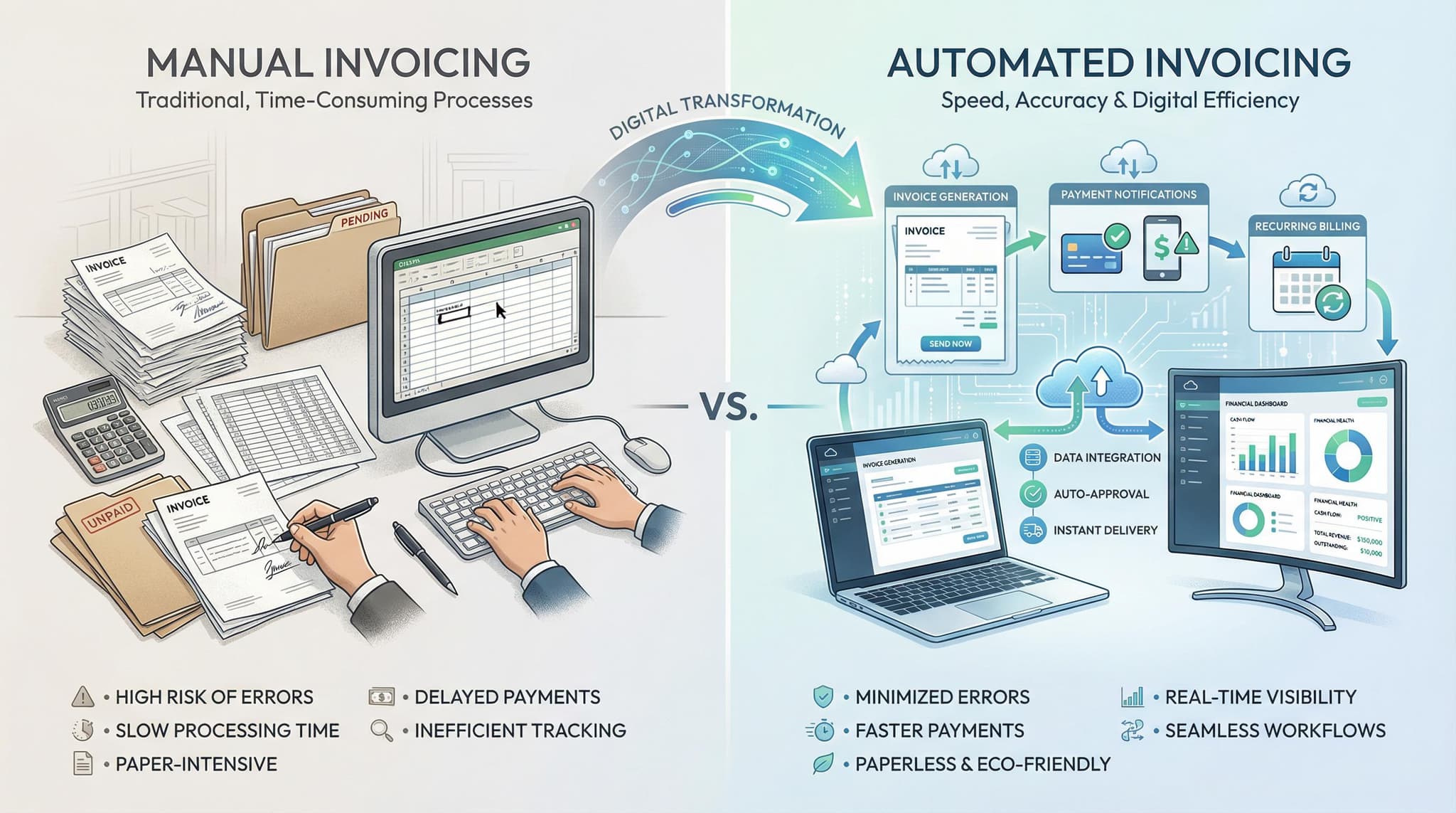
Invoicing is one of the most important financial processes within any business. It directly affects cash flow, financial records, and customer relationships. Despite its importance, many companies still rely on manual invoicing processes that involve spreadsheets, email attachments, and repetitive administrative work. As businesses grow, these methods can become inefficient and prone to error.
Automated invoicing systems help solve these challenges by streamlining how invoices are created, tracked, and managed. Instead of manually preparing invoices for every transaction, businesses can rely on structured systems that generate invoices automatically, track payments, and maintain accurate financial records. This shift from manual invoicing to automated workflows significantly improves operational efficiency.
The Challenges of Manual Invoicing
Manual invoicing often involves creating invoices individually, entering customer details repeatedly, calculating totals, and sending documents through email or other channels. While this approach may work for very small businesses with limited transactions, it quickly becomes difficult to manage as the company grows.
Manual processes increase the likelihood of errors. Incorrect invoice amounts, missing payment terms, or delays in sending invoices can lead to payment issues and confusion for customers. Inconsistent record keeping can also make it difficult for finance teams to track outstanding invoices or understand the company's cash flow position.
Another challenge is time. Preparing invoices manually requires repetitive work that could otherwise be automated. As transaction volumes increase, finance teams may spend a significant portion of their time generating invoices instead of focusing on financial planning or analysis.
What Is Automated Invoicing?
Automated invoicing refers to the use of accounting software or financial platforms to generate, send, and track invoices automatically. Instead of creating each invoice manually, businesses can configure systems that generate invoices based on predefined templates, billing schedules, or completed transactions.
These systems often include features such as recurring invoices, automated payment reminders, invoice tracking dashboards, and integration with accounting records. Automated invoicing platforms can also connect with payment systems, allowing customers to pay invoices directly through secure digital methods.
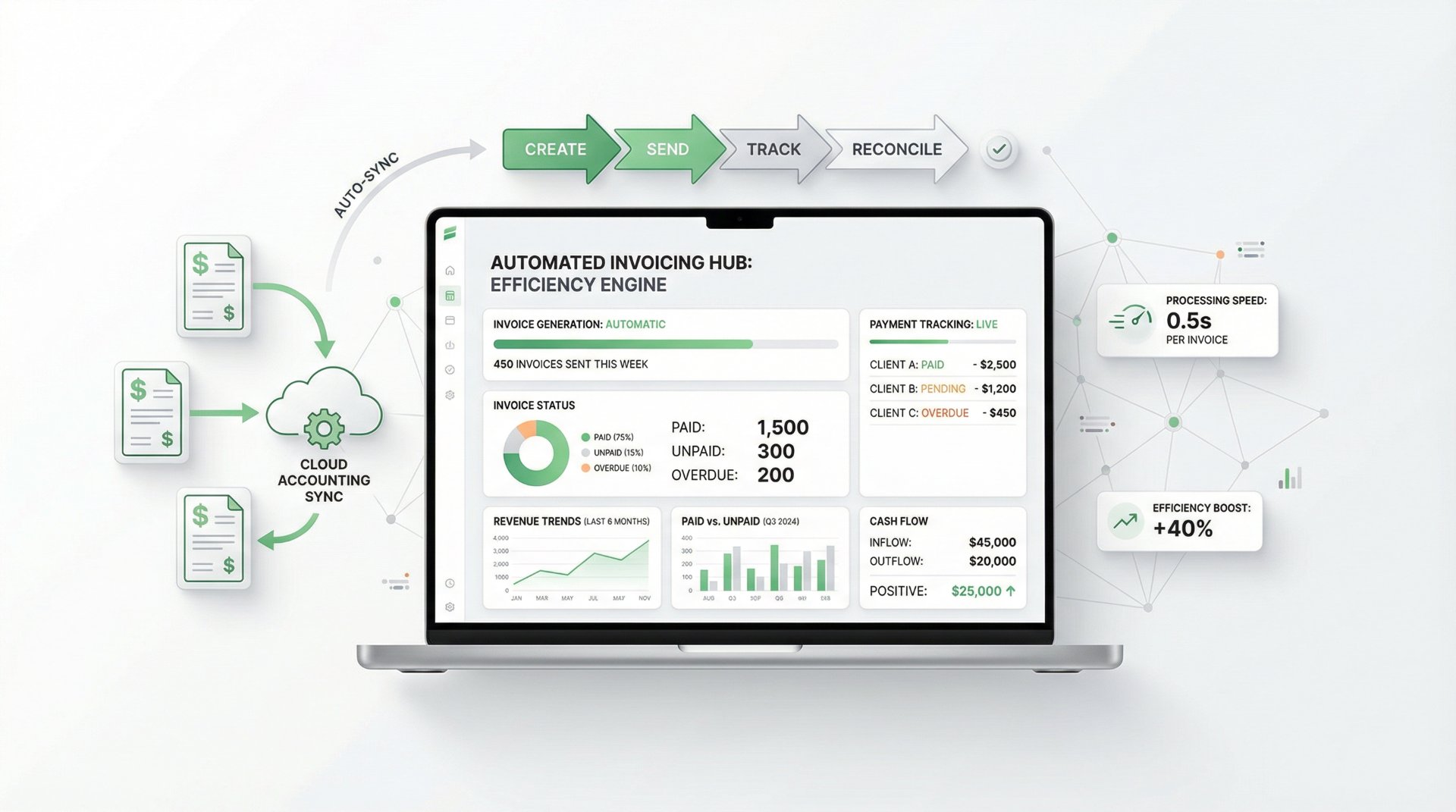
Modern accounting platforms increasingly include invoicing automation as a core feature. Systems such as Sage Accounting allow businesses to manage invoicing alongside bookkeeping, reporting, and financial management tasks within one structured environment.
Improved Operational Efficiency
One of the primary benefits of automated invoicing is improved operational efficiency. By removing repetitive manual tasks, businesses can process invoices faster and maintain more consistent billing cycles. Finance teams spend less time generating invoices and more time focusing on financial oversight.
Automation also reduces the need for repetitive data entry. Customer information, product details, and pricing structures can be stored within the invoicing system and reused automatically when generating invoices. This significantly reduces administrative workload.
When invoicing workflows are standardized, businesses can maintain consistent billing practices across different customers and departments. This consistency improves overall financial organization and reduces operational complexity.
Faster Payments and Improved Cash Flow
Automated invoicing systems also help businesses receive payments faster. When invoices are generated and sent immediately after transactions occur, customers are more likely to process payments on time. Delays caused by manual invoicing workflows are reduced.
Many automated invoicing platforms include payment tracking features that allow businesses to monitor outstanding invoices. Finance teams can quickly identify overdue payments and follow up when necessary. Some systems also send automatic payment reminders to customers before or after invoice due dates.
These features help businesses maintain healthier cash flow. Clear invoicing records and faster payment cycles provide better visibility into incoming revenue, allowing companies to plan expenses more effectively.
Reducing Human Errors
Manual invoicing increases the risk of human error. Incorrect totals, missing tax calculations, duplicate invoices, or inaccurate payment details can create confusion and require additional corrections. Even small mistakes can disrupt financial records.
Automated invoicing systems reduce these risks by performing calculations automatically and generating invoices based on stored data. Tax rates, invoice formats, and payment terms can be applied consistently across all transactions.
When financial data is generated within a structured system, records remain more accurate and easier to review. This accuracy becomes particularly important during financial reporting and tax preparation.
Better Financial Visibility
Another advantage of automated invoicing is improved financial visibility. Accounting platforms often provide dashboards that display invoice status, outstanding balances, and payment history. These insights help businesses understand how much revenue is expected and when payments are likely to be received.
Clear invoicing data allows business owners to monitor cash flow patterns more effectively. If customers consistently pay late, businesses can adjust payment terms or follow up earlier. If revenue is increasing, companies can plan future investments more confidently.
Financial visibility is particularly important for growing businesses. As transaction volumes increase, having structured financial insights helps companies maintain control over their operations.
Supporting Scalable Business Operations
As businesses grow, financial processes must scale with them. A manual invoicing system that works for a small startup may become unmanageable when the company begins serving dozens or hundreds of customers each month.
Automated invoicing systems help businesses scale without significantly increasing administrative workload. Recurring invoices can be generated automatically, billing schedules can be managed digitally, and financial records remain organized as transaction volumes increase.
Platforms such as Sage Accounting demonstrate how invoicing automation can be integrated into broader financial systems. By connecting invoicing with accounting records, reporting tools, and financial dashboards, businesses gain a more complete view of their financial activity.
Strengthening Customer Relationships
Efficient invoicing also improves customer relationships. Clear, professional invoices help customers understand payment expectations and reduce confusion about billing details. Automated systems ensure invoices are delivered consistently and include accurate information.
When customers receive well-structured invoices promptly, the payment process becomes smoother. Payment links, digital records, and clear billing information make transactions easier for both businesses and their clients.
Reliable invoicing processes contribute to a more professional business image. Customers are more likely to trust companies that maintain organized financial practices.
Reducing Administrative Burden
One of the most immediate benefits of automated invoicing is the reduction in administrative workload. Finance teams no longer need to create invoices individually or track payment records through multiple spreadsheets. Automated systems handle these tasks more efficiently.
This reduction in administrative burden allows finance teams to focus on higher-value activities such as financial analysis, budgeting, and strategic planning. Instead of spending hours generating invoices, teams can concentrate on improving the financial performance of the business.
Final Thoughts
Automated invoicing plays an important role in improving business efficiency. By reducing manual work, improving payment tracking, and maintaining structured financial records, automated invoicing systems help businesses operate more effectively.
As companies grow and transaction volumes increase, relying on manual invoicing processes becomes increasingly difficult. Modern accounting platforms help address these challenges by integrating invoicing automation with broader financial management tools.
Systems such as Sage Accounting illustrate how automated invoicing can support more efficient financial operations. When invoicing processes are organized, automated, and connected to accounting systems, businesses gain better control over cash flow, financial reporting, and overall operational stability.