How Payroll Errors Can Impact Business Stability?
Payroll errors might seem like small administrative mistakes, but they can quickly create bigger problems for a business. Incorrect payments, tax miscalculations, or delayed salaries can damage employee trust, cause compliance issues, and disrupt financial planning. Maintaining accurate payroll systems helps businesses stay organized, keep employees confident, and protect overall operational stability.
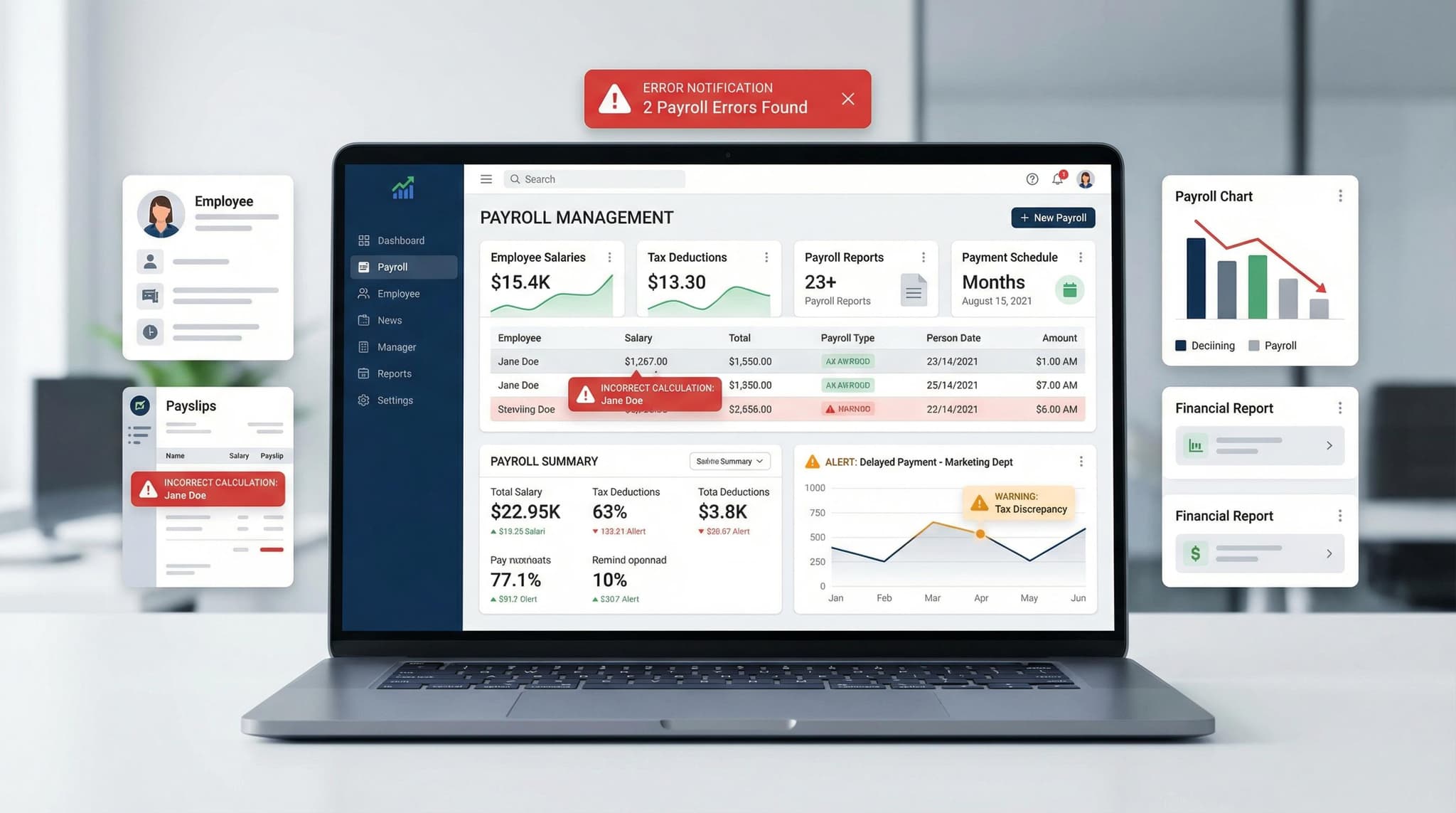
For many companies, payroll sits at the intersection of finance, HR, and compliance. This means payroll mistakes can affect employee trust, financial planning, regulatory compliance, and overall business stability. Understanding how payroll errors occur—and how they influence business operations—is essential for any organization that wants to maintain strong financial systems.
Understanding Payroll Errors
Payroll errors occur when employees are paid incorrectly or when payroll records contain inaccurate information. These mistakes can arise from incorrect salary calculations, tax miscalculations, missed payments, incorrect deductions, or inaccurate employee data. In smaller businesses, payroll tasks are sometimes managed manually through spreadsheets or basic accounting systems, which increases the likelihood of mistakes.
As companies grow and employ more staff, payroll processes become increasingly complex. Different pay structures, tax obligations, benefits, overtime calculations, and compliance requirements add layers of difficulty. Without structured systems, payroll administration can become difficult to manage accurately.
This is why many businesses adopt dedicated payroll systems or integrated accounting platforms that automate payroll processes. Digital payroll systems help reduce manual errors by calculating wages, tax deductions, and payment schedules automatically. Platforms such as Sage Payroll, for example, allow businesses to manage payroll processes in a structured and compliant environment while keeping financial records aligned with accounting systems.
The Financial Impact of Payroll Errors
Payroll errors can create direct financial costs for businesses. When employees are underpaid or overpaid, corrections must be made, and adjustments can require additional administrative work. In some cases, businesses may face penalties for incorrect tax submissions or delayed payroll reporting.
Overpayments can create cash flow issues, particularly for smaller businesses operating with tight financial margins. Recovering overpaid wages is often difficult and can create uncomfortable conversations between employers and employees. Underpayments, on the other hand, may require immediate correction and could potentially expose the business to legal complaints.
Financial instability can also arise when payroll reporting errors affect tax obligations. Incorrect payroll tax calculations may result in fines or compliance penalties from tax authorities. These financial consequences can quickly accumulate if payroll systems are not well organized.
The Impact on Employee Trust
Beyond financial consequences, payroll errors can significantly damage employee trust. Employees rely on consistent and accurate payment for their financial stability. When salaries are incorrect or delayed, frustration can grow quickly.
Even if payroll mistakes are unintentional, repeated issues may cause employees to question the reliability of the company's internal systems. Over time, this can affect morale, reduce employee satisfaction, and create unnecessary tension between management and staff.
Reliable payroll management helps reinforce professionalism within the organization. When employees know their compensation will be processed accurately and on time, it strengthens trust and contributes to a stable work environment.
Compliance and Regulatory Risks
Payroll compliance is another critical factor. Businesses must follow specific tax regulations, employment laws, and reporting requirements when managing payroll. Mistakes related to tax withholding, employee classification, or benefits deductions can expose companies to regulatory scrutiny.
Many jurisdictions require businesses to submit accurate payroll records and tax filings within strict deadlines. Payroll errors can result in compliance violations, financial penalties, or additional administrative investigations.
Modern payroll systems help reduce these risks by automating tax calculations and ensuring payroll reports are generated accurately. Solutions such as Sage Payroll integrate payroll management with financial reporting tools, helping businesses maintain structured payroll processes while staying aligned with regulatory requirements.
Operational Disruptions
Payroll mistakes can also disrupt daily operations. When payroll errors occur, finance teams often need to pause other tasks in order to investigate discrepancies and correct payment records. This can delay other financial activities such as reporting, budgeting, and reconciliation.
For businesses with limited finance staff, even small payroll issues can create operational strain. Instead of focusing on strategic financial planning, teams must spend time fixing avoidable administrative problems.
Over time, recurring payroll errors can slow down business processes and reduce overall operational efficiency. Businesses that rely on structured payroll systems often experience fewer disruptions because payroll workflows become standardized and automated.
Why Payroll Systems Matter
Managing payroll effectively requires more than basic record keeping. Businesses need systems that track employee data, calculate wages, apply tax rules, and maintain accurate financial records. Manual processes may work temporarily, but they rarely scale well as companies grow.
Digital payroll systems help simplify these responsibilities. Automated calculations reduce human error, while integrated financial records ensure payroll data aligns with accounting systems. This allows finance teams to maintain clearer oversight of salary expenses and payroll obligations.
Many modern accounting platforms now include integrated payroll tools that connect payroll data with broader financial systems. For example, platforms such as Sage Accounting and Sage Payroll allow businesses to manage payroll alongside invoicing, expense tracking, and financial reporting. This integration helps create a more reliable financial infrastructure.
The Role of Payroll in Business Stability
Payroll stability is closely connected to overall business stability. When payroll processes operate smoothly, employees are paid correctly, financial records remain accurate, and compliance requirements are easier to manage. This stability supports smoother business operations.
When payroll processes are disorganized, however, the opposite can occur. Financial reporting becomes less reliable, employee trust declines, and administrative workloads increase. Over time, these issues can weaken the operational foundation of a business.
Strong payroll management therefore plays a significant role in maintaining a healthy financial system. It ensures that employee compensation, tax reporting, and financial planning remain aligned.
Reducing the Risk of Payroll Errors
Businesses can reduce payroll errors by establishing structured payroll processes and adopting reliable financial systems. Clear payroll policies, consistent employee records, and automated payroll tools help maintain accuracy.
Many companies also conduct regular payroll reviews to verify calculations and ensure compliance obligations are met. By auditing payroll data periodically, businesses can identify potential issues before they escalate.
Technology also plays an important role. Payroll software and integrated accounting platforms reduce reliance on manual calculations and help businesses maintain organized payroll records.
Final Thoughts
Payroll may appear to be a routine administrative task, but its influence on business stability is significant. Errors in payroll can lead to financial losses, employee dissatisfaction, compliance risks, and operational disruptions. For this reason, businesses must treat payroll management as a critical component of their financial infrastructure.
Modern payroll systems help organizations manage payroll processes more efficiently by automating calculations, maintaining accurate records, and aligning payroll data with broader financial systems. Platforms such as Sage Payroll illustrate how digital tools can support reliable payroll management while helping businesses maintain compliance and operational stability.
Ultimately, stable payroll systems support stable businesses. When payroll processes are accurate, organized, and integrated with accounting systems, companies are better positioned to manage growth, maintain employee trust, and operate with greater financial confidence.