The Hidden Cost of Manual Processes in Growing Businesses
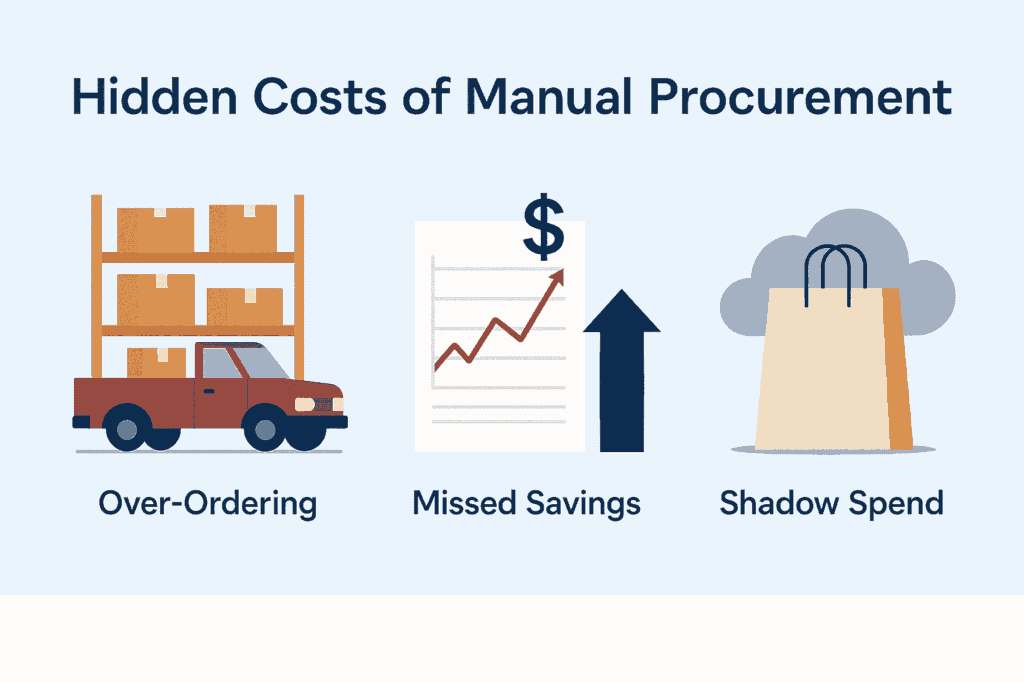
Growth is often celebrated as proof of progress. Revenue increases, teams expand, new customers arrive, and operational complexity rises. Yet beneath that visible momentum, many growing businesses carry an invisible burden — manual processes that quietly consume time, introduce risk, and restrict strategic clarity.
At first glance, manual workflows appear harmless. Spreadsheets feel flexible. Email approvals seem manageable. Payroll handled internally appears economical. But as a business scales, these systems rarely evolve alongside operational demand.
The result is a hidden cost structure that does not show up clearly on a balance sheet — yet influences performance every single day.
The Illusion of Operational Control
Manual systems often create the illusion of control. When leaders personally review invoices, reconcile accounts, or process payroll, there is a sense of direct oversight.
However, control built on manual oversight does not scale. What works with five employees becomes overwhelming at twenty. What feels efficient with ten monthly invoices becomes unstable with one hundred.
As transaction volume increases, small inefficiencies multiply. Processes slow. Errors creep in. Confidence declines.
Time: The Most Underestimated Expense
The most immediate hidden cost of manual processes is time.
Time spent re-entering financial data, manually reconciling transactions, chasing approvals, correcting errors, and updating spreadsheets accumulates quietly. Individually, these tasks appear minor. Collectively, they consume dozens of hours every month.
For growing businesses, those hours represent opportunity cost. They could be invested in product innovation, customer experience, strategic partnerships, or leadership development.
When growth is accompanied by increasing administrative workload, momentum begins to feel heavy rather than energising.
Error Risk and Financial Exposure
Manual systems increase the probability of human error. A small calculation mistake. An incorrect tax entry. A missed invoice. A duplicated payment.
These errors may initially seem insignificant. Yet their downstream consequences can be substantial:
• Financial misstatements
• Regulatory penalties
• Supplier disputes
• Employee dissatisfaction
• Delayed reporting cycles
Correcting mistakes consumes additional time and often requires professional intervention. The cycle of rework becomes recurring rather than exceptional.
Delayed Decision-Making in Fast-Moving Markets
Modern businesses operate in environments where agility determines competitiveness. Yet manual reporting processes introduce delay.
When financial data must be manually gathered and verified before leadership can act, strategic responsiveness weakens. Opportunities may be missed. Costs may escalate unnoticed. Revenue shifts may go unaddressed.
In fast-moving markets, delayed awareness is a competitive disadvantage.
The Psychological Weight of Uncertainty
The hidden cost of manual systems is not purely financial. It is psychological.
Unclear financial visibility creates ongoing mental strain. Leaders question whether payroll calculations are accurate. They worry about compliance deadlines. They hesitate when planning expansion.
This persistent uncertainty consumes cognitive bandwidth. Strategic thinking becomes cautious rather than confident.
When leaders lack trust in their financial systems, decision-making slows and stress increases.
Fragmentation and Organisational Silos
Manual workflows often create fragmented information silos. Finance maintains one record. Operations maintains another. Sales tracks performance separately.
Without integration, inconsistencies emerge. Meetings focus on reconciling discrepancies instead of analysing performance.
Alignment suffers. Growth demands coordination — and coordination requires unified systems.
Compliance Complexity in a Digital Era
Regulatory frameworks increasingly require digital reporting and structured documentation. Manual systems struggle to meet these expectations efficiently.
Late submissions, incorrect calculations, and incomplete records introduce compliance risk. Fines are visible consequences. Reputational damage is often the deeper cost.
Scaling Magnifies Structural Weakness
Growth does not eliminate inefficiencies — it amplifies them.
A small reporting delay becomes a strategic blind spot. An informal approval process creates confusion across departments. A simple payroll spreadsheet becomes unmanageable across multiple teams.
Without structural upgrades, scaling introduces fragility rather than strength.
The Cultural Impact of Inefficiency
Operational structure influences workplace culture. Teams working within efficient, integrated systems experience clarity and stability.
Conversely, teams navigating manual environments often face last-minute urgency, recurring corrections, and avoidable frustration.
Over time, inefficiency normalises stress.
From Manual Effort to Strategic Leverage
Eliminating manual processes is not about removing human involvement. It is about redirecting human effort toward analysis, planning, and leadership.
Structured systems enable automated reconciliation, real-time dashboards, integrated payroll and accounting, and continuous financial visibility.
Automation enhances human contribution rather than replacing it.
The Competitive Advantage of Operational Discipline
Businesses that transition away from manual workflows gain measurable advantages:
• Faster decision cycles
• Reduced compliance risk
• Greater financial accuracy
• Improved employee confidence
• Increased leadership clarity
Operational discipline supports sustainable growth.
Final Reflection
Manual systems rarely fail dramatically. Instead, they gradually restrict potential. They consume time, create stress, and introduce risk in subtle ways.
The hidden cost of manual processes is not merely financial. It is the limitation they impose on ambition.
Growing businesses require infrastructure that evolves with them. Without structured systems, growth becomes heavier rather than lighter.
Efficiency is not simply about speed. It is about clarity, control, and confidence.
And in modern business, those qualities are invaluable.